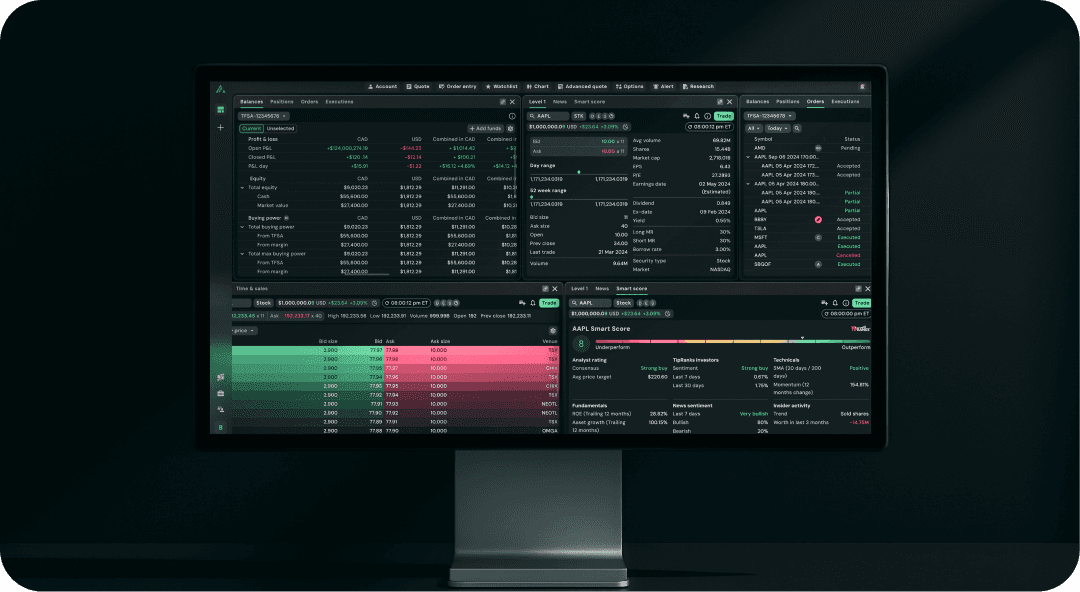
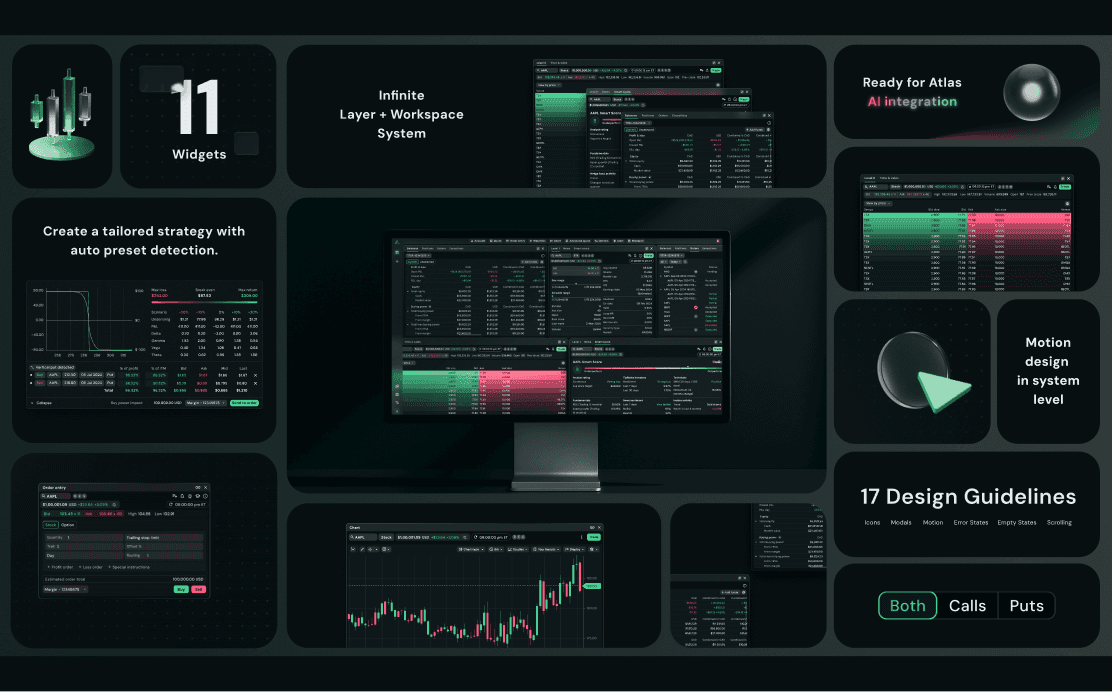
Establishing the UX skeleton and interaction standards for Canada's next-gen trading platform.
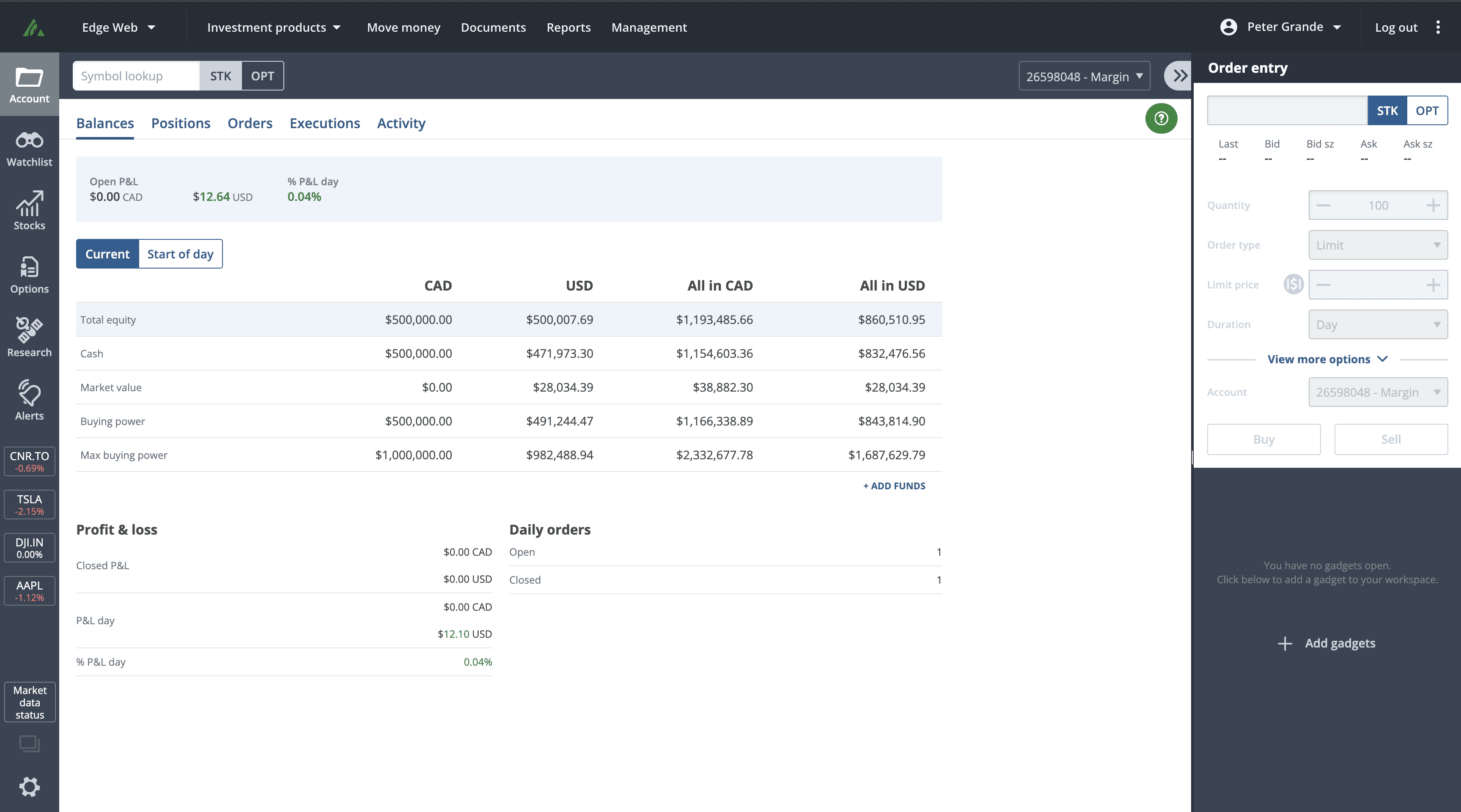
A modular, high-density framework that replaced legacy constraints with a scalable system now powering the entire Pro ecosystem.
Friction and Pivot
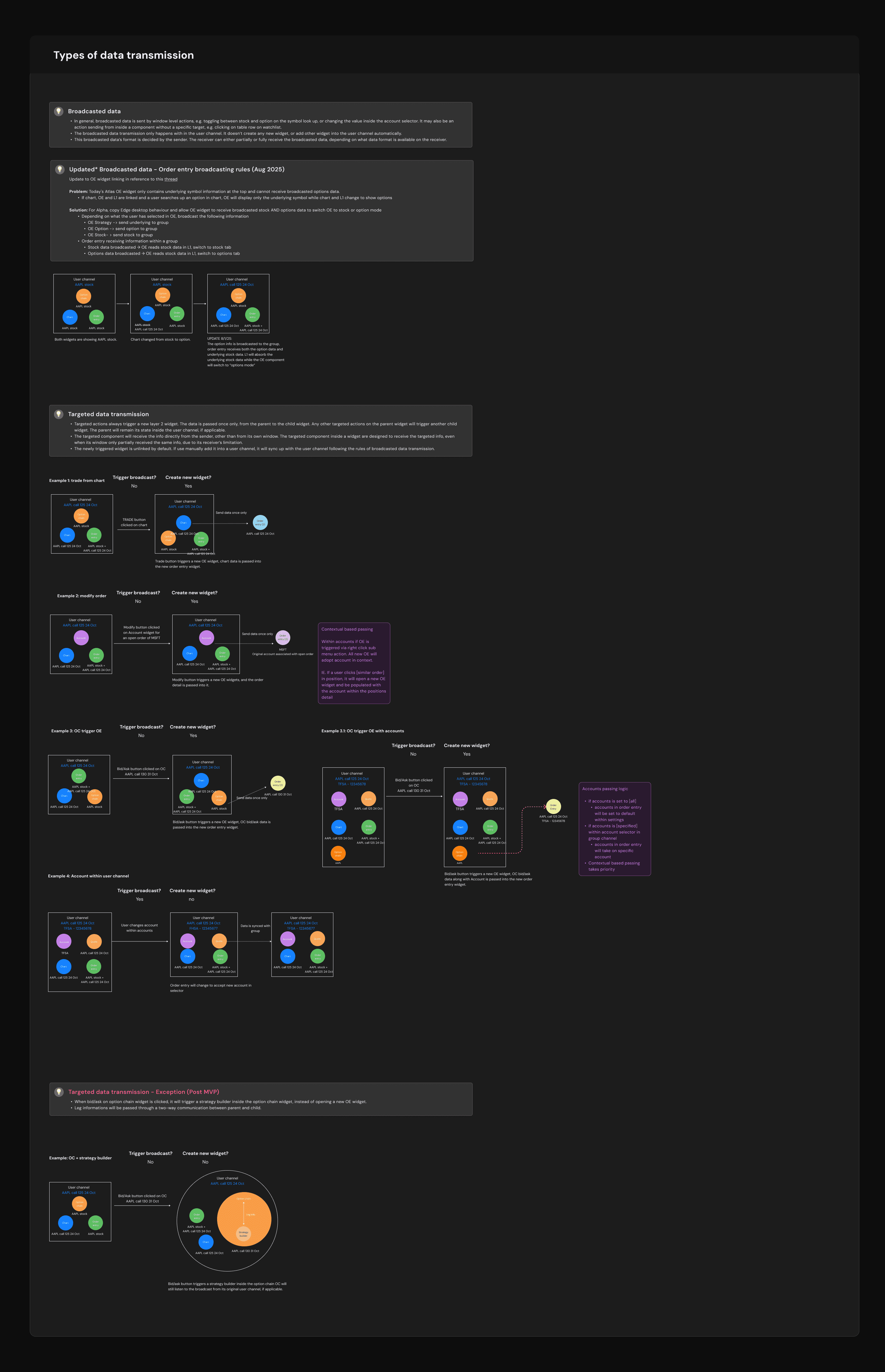
The Problem: Users expect "smart" connectivity across the workspace, but their behaviour changes based on their mental model. For example, clicking a symbol to browse should update a linked Quote widget, but clicking a price to take action should trigger a contextual Order Entry panel. These context-shifting behaviours were flagged by Dev as high-complexity, resource-heavy customizations.
The Challenge: Designing a scalable "Linking Logic" that could distinguish between browsing patterns and action-oriented triggers without requiring an impossible amount of bespoke code for every widget combination.
The Pivot: I led a series of stress-testing workshops to map out complex edge cases. By balancing user intent with technical constraints, I designed a unified Data-Passing Framework. This framework allowed widgets to be grouped dynamically, triggering different behaviors (In-place updates vs. Contextual panel spawning) based on the user's specific task/intent rather than just the data type.
The Validation: I ran high-fidelity usability tests on these complex scenarios to ensure the transition between "Browsing" and "Action" felt seamless and predictable. The result was a system that satisfied the power user's need for context-aware speed while remaining technically maintainable for engineering.
Impact
Future-Proof Foundations: Successfully established a scalable architectural skeleton that transitioned the platform from a collection of static pages to a cohesive, high-performance "Trading OS."
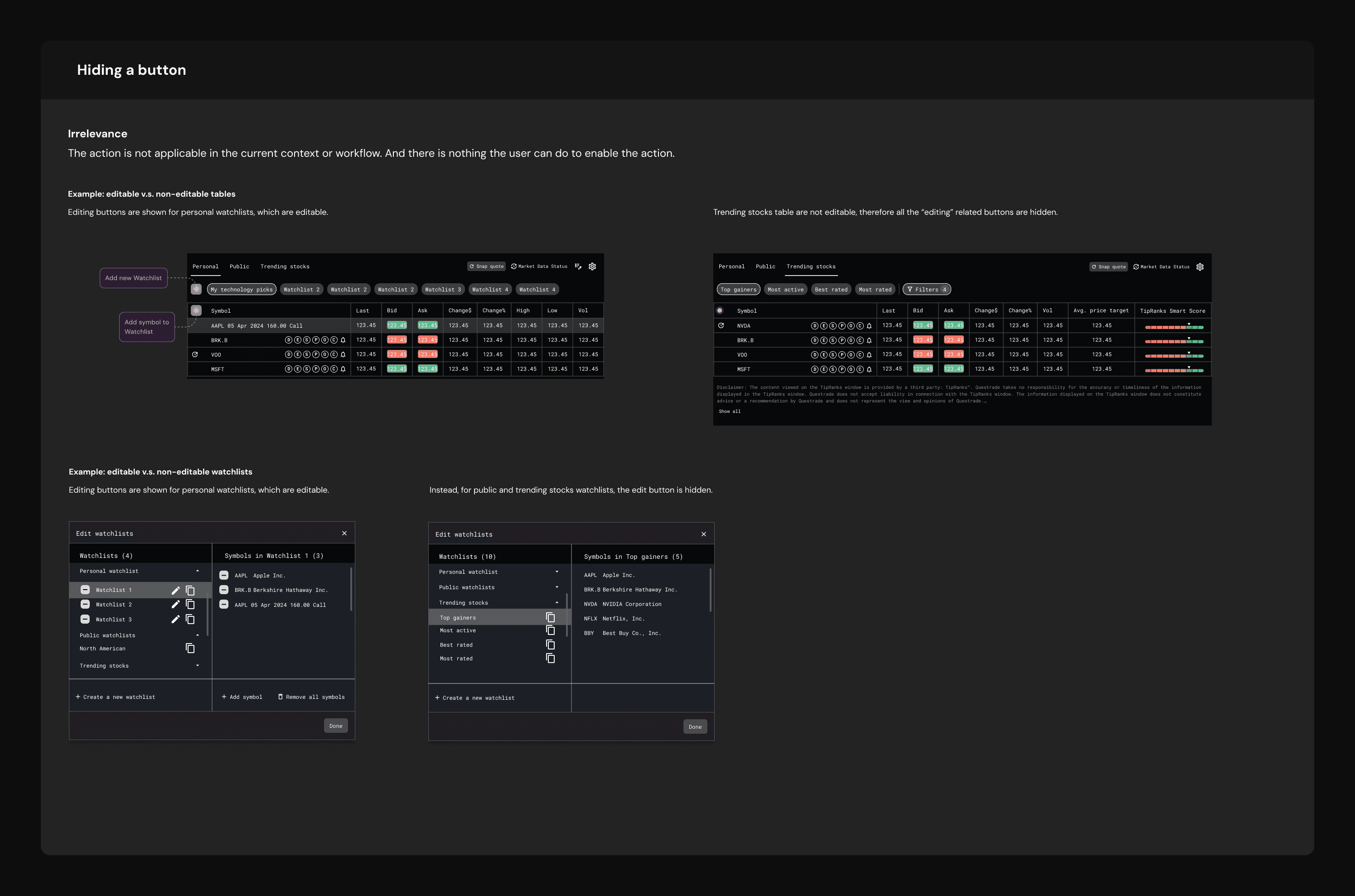
Platform-Wide Consistency: By codifying systemic interaction rules early in the process, I ensured long-term visual and functional alignment across all future feature teams and specialized widgets.
The Blueprint: Created comprehensive architectural documentation that serves as the single "Source of Truth" for design and engineering, significantly reducing friction for subsequent development phases.
Institutional Readiness: Provided the robust foundation necessary to attract institutional-grade clients who require deep workspace customization and professional data density.
Impact
Future-Proof Foundations: Successfully established a scalable architectural skeleton that transitioned the platform from a collection of static pages to a cohesive, high-performance "Trading OS."
Platform-Wide Consistency: By codifying systemic interaction rules early in the process, I ensured long-term visual and functional alignment across all future feature teams and specialized widgets.
The Blueprint: Created comprehensive architectural documentation that serves as the single "Source of Truth" for design and engineering, significantly reducing friction for subsequent development phases.
Institutional Readiness: Provided the robust foundation necessary to attract institutional-grade clients who require deep workspace customization and professional data density.
Impact
Future-Proof Foundations: Successfully established a scalable architectural skeleton that transitioned the platform from a collection of static pages to a cohesive, high-performance "Trading OS."
Platform-Wide Consistency: By codifying systemic interaction rules early in the process, I ensured long-term visual and functional alignment across all future feature teams and specialized widgets.
The Blueprint: Created comprehensive architectural documentation that serves as the single "Source of Truth" for design and engineering, significantly reducing friction for subsequent development phases.
Institutional Readiness: Provided the robust foundation necessary to attract institutional-grade clients who require deep workspace customization and professional data density.