My Role
Lead designer
Platform
MyPortal (Web) & QuestMobile
Recurring Investments
Invest on autopilot
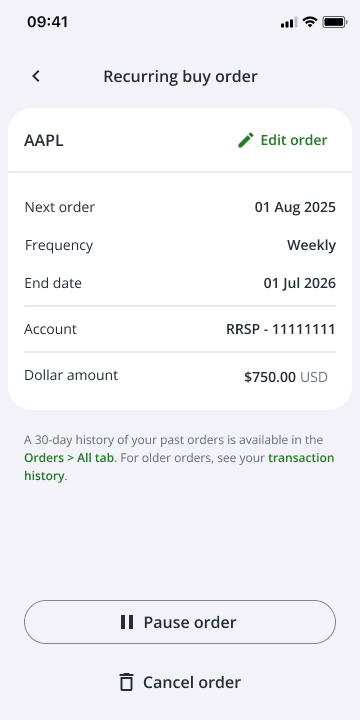
Designed to automate wealth accumulation for Questrade clients. By shifting the focus from manual trading to scheduled, automated contributions, the project aims to increase platform engagement and promote long-term financial discipline.
Context and Constraints
The Problem: High user demand for automated "Set it and Forget it" tools to replace manual recurring workflows.
The Business Pivot: Transitioning to Commission-Free Trading. The goal shifted from individual trade fees to building AUM (Assets Under Management).
The Objective: Create a stable, predictable revenue stream by converting erratic traders into long-term, "sticky" investors.
Market Logistics: Unlike standard subscriptions, orders are bound by market hours and holidays. I had to map UI states for orders triggered during "Off-market" or "Early Close" periods.
API Limits: The legacy backend lacked the logic to handle non-trading days. I had to design the "Rules of Execution" for when an order date hit a weekend, a holiday, or a surprise market closure.
Hi-fi Deep Dive
Before
After
The Initial Concept: The "Add-on" Strategy
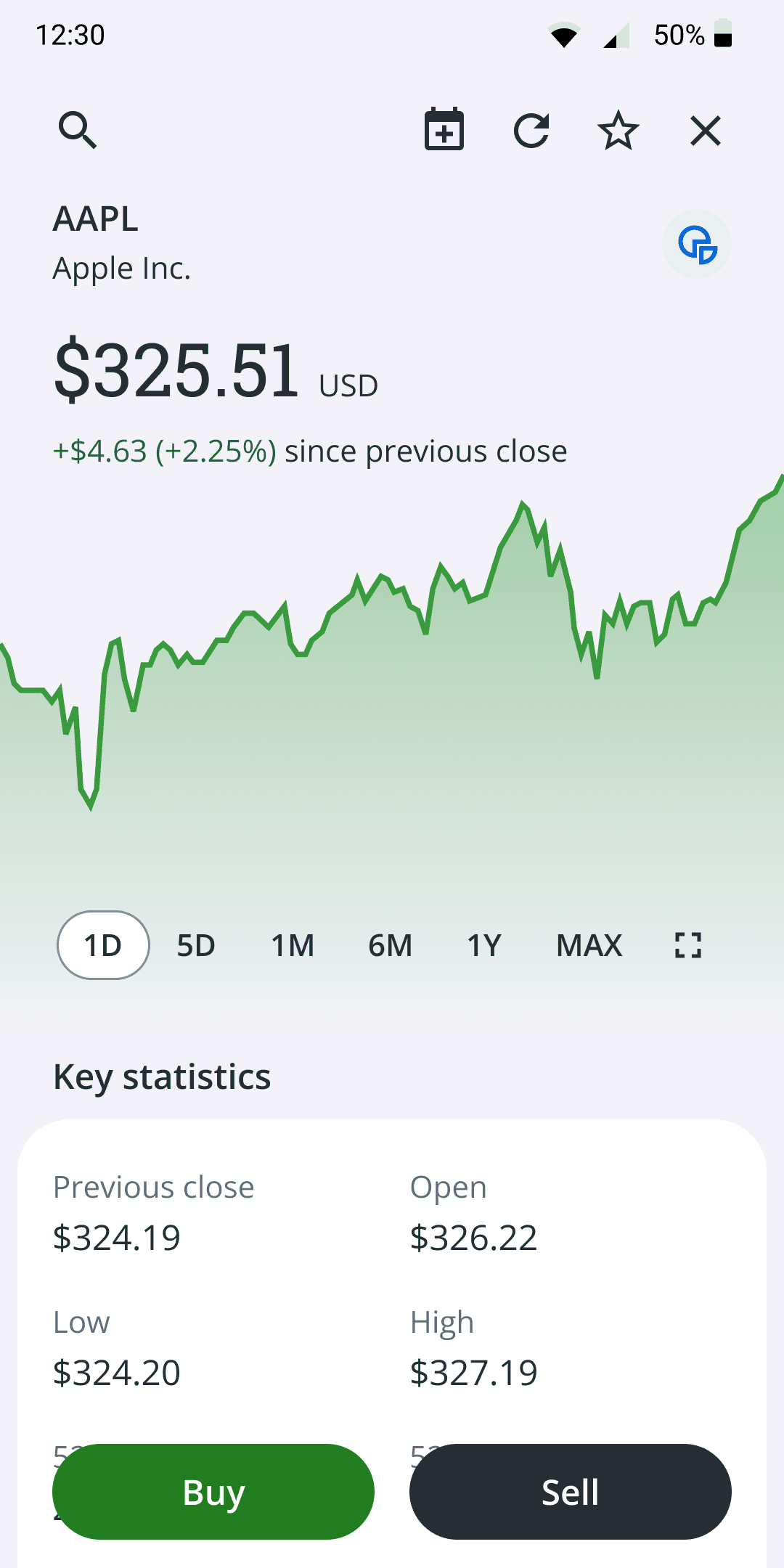
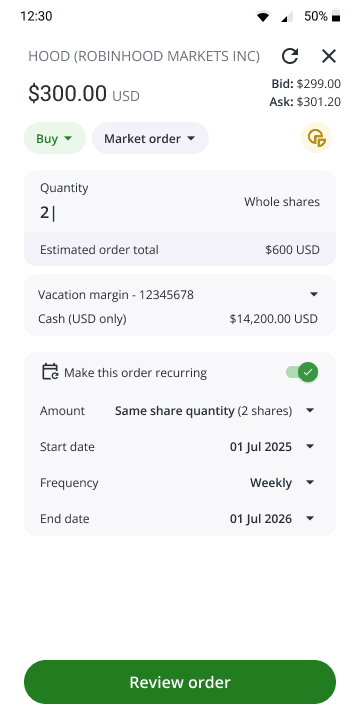
Originally, I integrated the recurring feature directly into the high-traffic Order Entry Panel. By adding a simple toggle, I aimed to capture users during their existing day-to-day workflow, treating automation as a seamless "add-on" to a manual trade.
The Conflict: 50/50 Mental Models
User testing revealed a significant split in mental models regarding the Start Date:
Group A expected the recurring cycle to begin immediately upon the first manual trade.
Group B expected the first automated trigger to happen at the next scheduled interval (e.g., next Monday).
This 50/50 split created high cognitive friction and potential financial anxiety, as users weren't certain when their funds would actually move.
The Solution: Intent-Based Logic
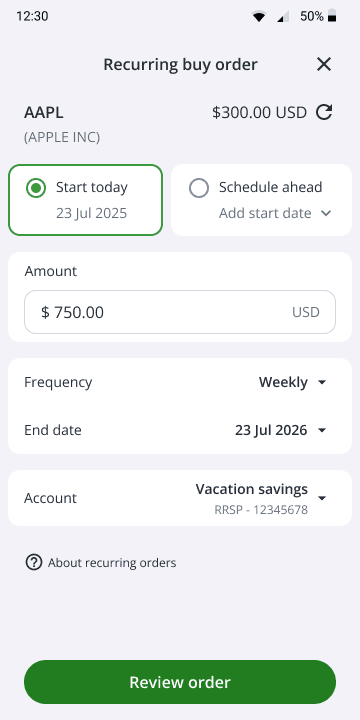
To eliminate ambiguity, I bifurcated the experience based on user intent:
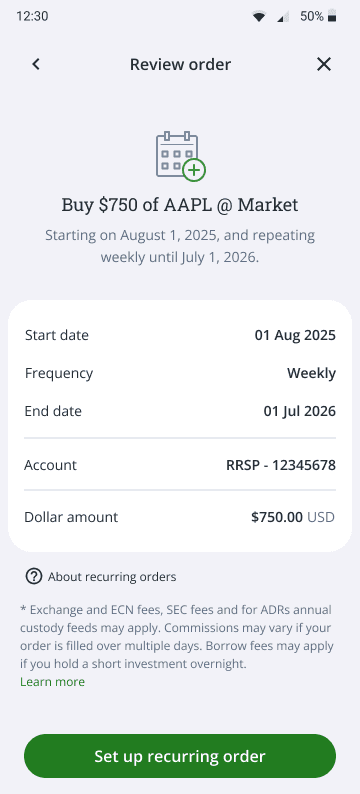
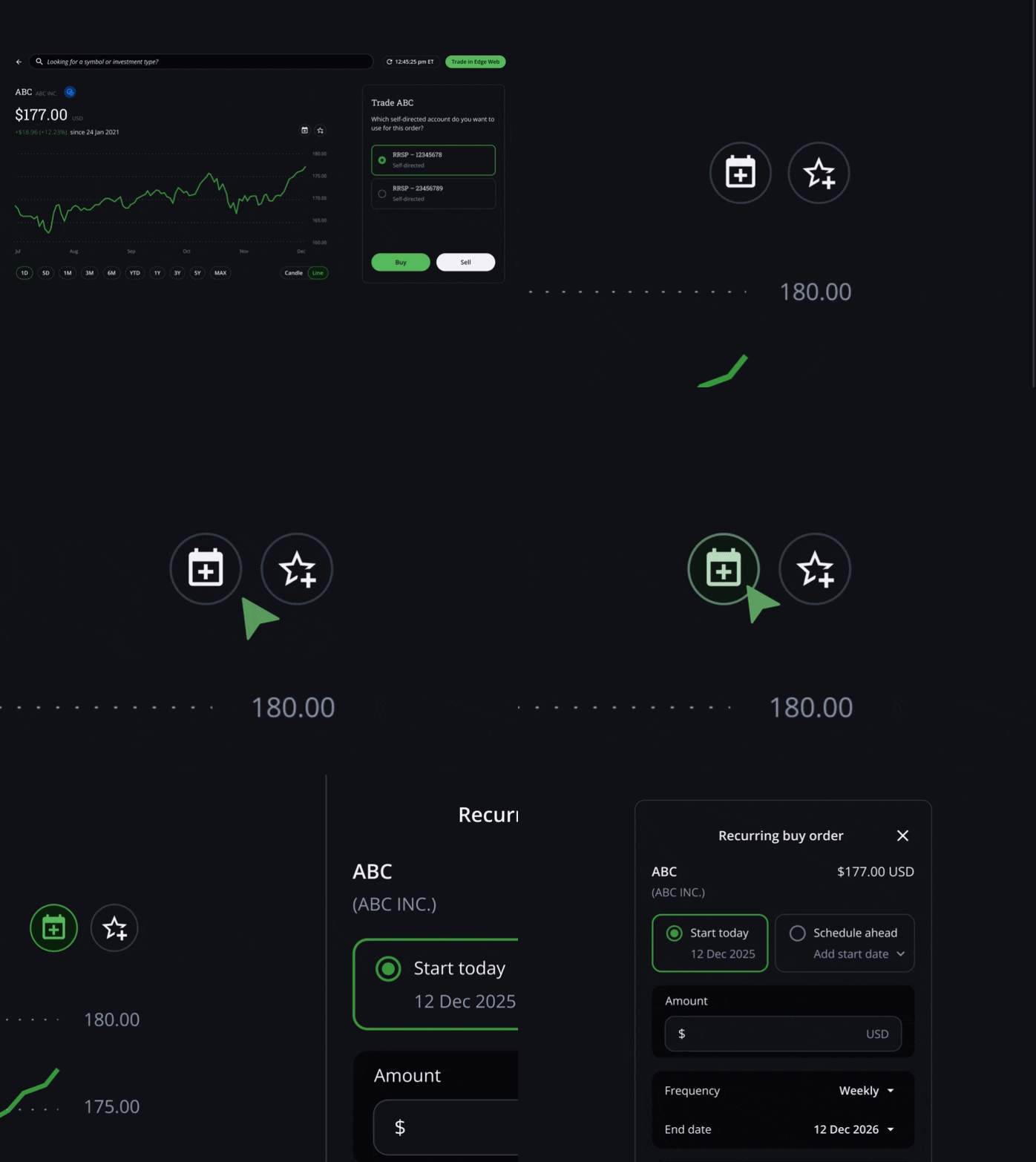
Dedicated Setup (The Planner): Created a new entry point with a mutually exclusive "Start Today vs. Future Date" selection. This provided 100% clarity for users specifically seeking to schedule.
Order Panel (The Action): Retained the "Add-on" toggle but restricted it to "Start Today" only. This aligned with the mental model that an order panel is for immediate execution.
The Result: By mapping logic to the entry point, I satisfied both the "active trader" and the "long-term planner" without cognitive friction.
Friction and Pivot
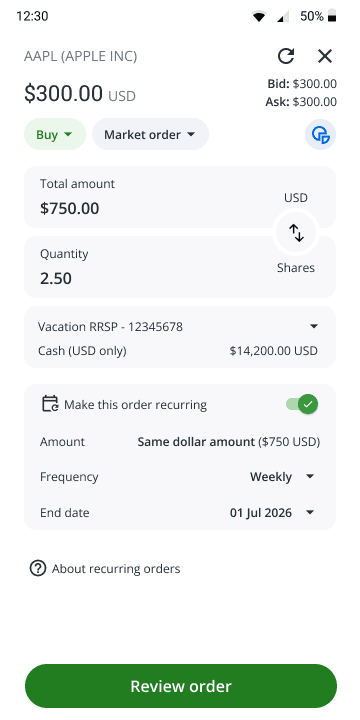
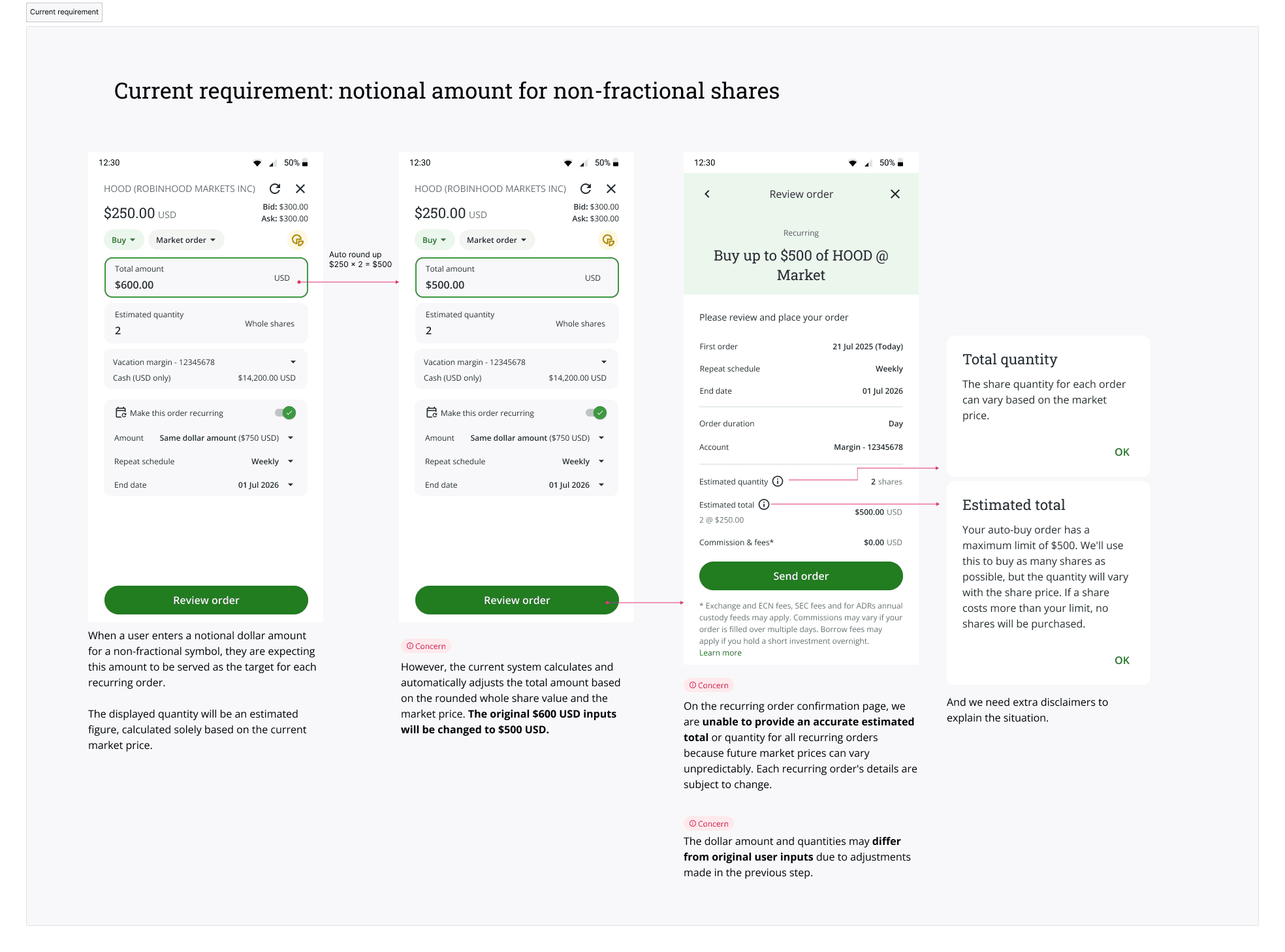
Friction 1: The Fractional Gap. The business initially required non-fractional trading, which conflicted with the "Fixed Dollar" habit of recurring investors.
The Pivot: I challenged the requirement by presenting user research on investment mental models. I successfully shifted the product priority, making Fractional Trading a core requirement to ensure the feature's success.
Friction 2: The "Start Today" Technical Wall. Our API treated immediate manual orders and scheduled recurring orders as two separate systems. Engineering pushed back on the complexity of merging them into one flow.
The Solution: I partnered deeply with Devs (even leveraging AI/Gemini to brainstorm architectural workarounds) to design a Unified Execution Engine.
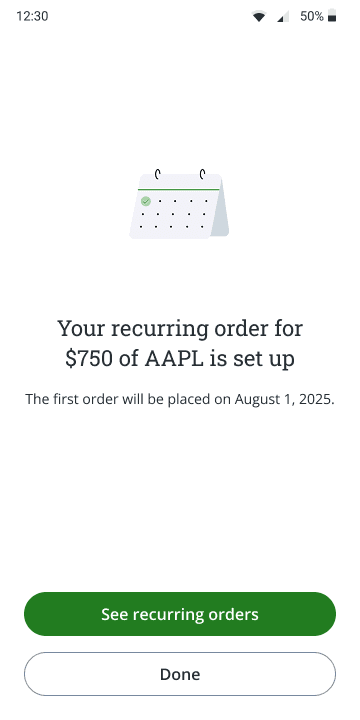
Impact: We built a seamless "Single-Order" experience that hides backend complexity. This gave us a competitive edge, as we are currently the only broker to solve this specific synchronization hurdle.
Hi-fi Gallery